
Boxwoods Looking Under the Weather—the Box Tree Moth
Emily Benton - September 17, 2025 - NewsSadly, this invasive species is decimating a beloved garden staple—the boxwood. But hope isn’t lost. With early identification and treatment, our favorite structural shrub still stands a chance.
The BTM is an invasive pest that can cause significant damage and potentially kill boxwood (Buxus) plants if left unchecked. The caterpillars are ravenous feeders, and heavy infestations can completely defoliate host plants. After the leaves are gone, they feed on the bark, which eventually kills the plant. It has been confirmed in Delaware, Massachusetts, Michigan, Ohio, Pennsylvania, and West Virginia.
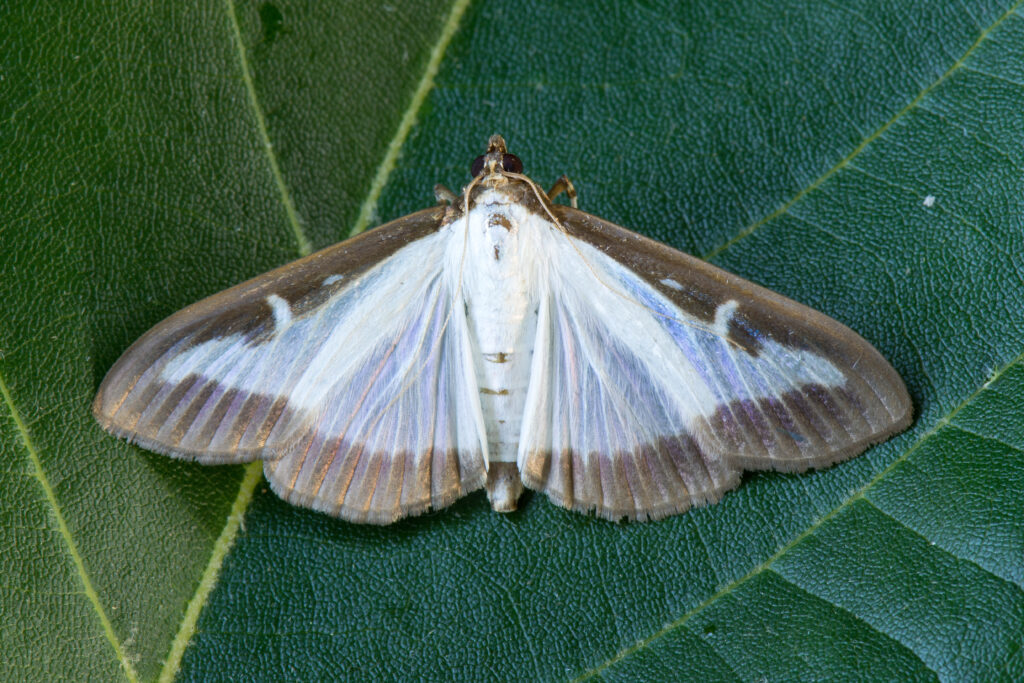
Appearance
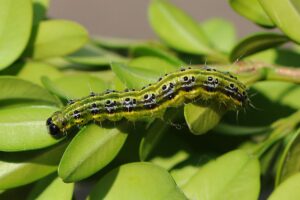
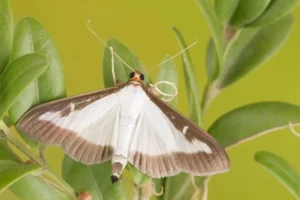
A box tree moth starts as a lime-green caterpillar with black stripes, white spots, hairs, and a shiny black head. Adult box tree moths generally have white wings with a thick brown border.
Signs of Infestation & Damage
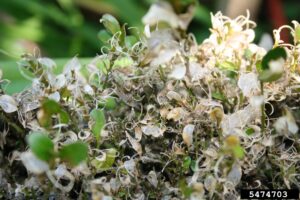
Brown leaves and defoliation, caterpillars and webbing frass (sawdust-like excrement from insects), Pupa (may be wrapped in webbing) & adult moths (they’re difficult to spot, as they’re most active at night).
Identification & Prevention
BTM can appear anywhere. Be aware of what to look for with BTM and remain vigilant! The Ohio Department of Agriculture (ODA) has developed an online reporting tool that allows reporting of BTM in three easy steps. One step involves sending a clear, in-focus picture(s) of BTM caterpillars. Photos of BTM can be sent using the ODA reporting tool.
Treatment
Insecticides are currently the most reliable tool for suppressing BTM populations. BTM caterpillars can be killed using a wide range of insecticides. BTM insecticides we carry for home gardeners include ferti-lome Triple Action, Sevin RTU, and BioAdvanced Rose & Flower Insect Killer Ready-To-Use.
When Not to Treat
Do not make preventative insecticide applications to boxwoods! Insecticide applications should only be made to boxwoods with an identified BTM infestation, or to those boxwoods near a confirmed BTM caterpillar infestation. Making unwarranted insecticide applications is a waste of money and product, and can also have unintended consequences, including the production of secondary pest outbreaks. For homeowners seeking a company to inspect and potentially treat their boxwoods, please contact Ziehler Lawn Care (937) 907-1767 or Buckeye Ecocare (937) 435-4727 and let them know we referred you.
What if They’re Too Far Gone?
Unfortunately, a Box Tree Moth infestation can sometimes happen seemingly overnight. If your boxwoods aren’t salvageable, there are plenty of alternatives. Some of our favorite options: Arborvitae ‘Bowling Ball’, Arborvitae ‘Hetz Midget’, Arborvitae ‘Little Giant’, Inkberry Holly ‘Gem Box’.
Back To Posts
